The Internal Business Environment: Building Blocks of Organizational Performance
Organizational Structure and Governance
Every business has a unique organizational architecture that shapes how work gets done. Hierarchy types significantly impact decision-making speed and effectiveness. Flat hierarchies reduce management layers, enabling faster decisions and greater employee autonomy. Companies like Valve Software operate with almost no formal hierarchy, allowing employees to choose their projects based on perceived value. In contrast, tall hierarchies with numerous management layers provide clear reporting lines but often slow down decision-making processes, as seen in traditional banking institutions.
The centralization of authority creates another critical dimension. Centralized structures concentrate decision-making power among top executives, ensuring strategic alignment but potentially creating bottlenecks. Decentralized structures distribute decision rights throughout the organization, enabling faster responses to local market needs but risking strategic fragmentation. Harvard Business Review research shows that finding the right balance between these approaches remains one of leadership's greatest challenges.
Organizations typically adopt one of several design configurations:
- Functional structures group employees by specialization (marketing, finance, operations)
- Divisional structures organize around products, geographic regions, or customer segments
- Matrix structures combine both approaches, with employees reporting to multiple managers
Each design creates different internal dynamics. Functional structures promote specialized expertise but may create silos. Divisional structures enhance market responsiveness but can duplicate resources. Matrix structures balance specialization with integration but often create role ambiguity.
Corporate governance provides the framework for leadership accountability. Robust governance mechanisms—clear board responsibilities, transparent reporting systems, ethical codes—establish guardrails for organizational behavior and protect stakeholder interests.
Resources and Capabilities
Organizations rely on diverse resources to create value. Tangible resources include financial assets (cash reserves, borrowing capacity), physical assets (facilities, equipment), and technological infrastructure. These resources appear on balance sheets and can be measured using financial metrics like ROI or asset utilization rates.
Intangible resources often provide stronger competitive advantages because they're harder for competitors to replicate. These include intellectual property (patents, copyrights), brand equity, organizational knowledge, and customer relationships. While more challenging to measure directly, tools like brand valuation methods and intellectual capital assessments help quantify their value.
The Resource-Based View (RBV) offers a framework for evaluating organizational strengths. This approach, pioneered by management scholars, suggests that sustained competitive advantage stems from resources that are valuable, rare, difficult to imitate, and non-substitutable (VRIN criteria).
Core competencies represent unique combinations of resources and capabilities that distinguish an organization. Apple's integration of hardware and software design, Amazon's logistics excellence, and Toyota's manufacturing processes exemplify competencies that drive sustainable competitive advantage.

Organizational Culture and Values
Culture represents the shared assumptions, values, and norms that guide behavior within an organization. Strong cultures align employee actions with organizational goals without explicit rules for every situation.
Edgar Schein's model identifies three levels of organizational culture:
- Artifacts: Visible elements like office layout, dress codes, and company rituals
- Espoused values: Explicitly stated principles and strategies
- Basic assumptions: Unconscious, taken-for-granted beliefs that determine perception and behavior
Culture profoundly influences workplace dynamics. Positive cultures foster engagement, innovation, and retention. Research shows companies with strong cultures outperform those without by 20-30% on key metrics. Employees who feel cultural alignment report higher job satisfaction and demonstrate greater discretionary effort.
Organizations can assess culture through surveys, focus groups, and observation. Changing culture requires consistent leadership behavior, symbolic actions, reward system alignment, and persistent communication of desired values.
Internal Systems and Processes
Value chain analysis helps organizations identify key activities where they can create competitive advantage. By mapping primary activities (inbound logistics, operations, outbound logistics, marketing, service) and support activities (procurement, technology, HR, infrastructure), companies pinpoint areas for improvement.
Information systems provide the technological backbone for operational efficiency. Enterprise Resource Planning (ERP) systems integrate functions across the organization, while Customer Relationship Management (CRM) platforms enhance customer interactions.
Quality management frameworks like Total Quality Management (TQM) and Six Sigma drive process excellence. These methodologies use statistical tools and structured problem-solving approaches to reduce defects and enhance consistency. McKinsey analysis suggests that digital transformation of internal processes can reduce costs by 15-25% while improving customer satisfaction.
Cross-functional integration breaks down departmental silos, enabling smoother workflows and faster innovation cycles. Effective integration mechanisms include cross-functional teams, integrated performance metrics, and collaborative digital workspaces.
The External Business Environment: Navigating Forces Beyond Organizational Control
Macro-Environmental Analysis: The PESTEL Framework
While organizations can largely control their internal environment, the external landscape operates beyond their direct influence. The PESTEL framework helps businesses methodically analyze these external factors.
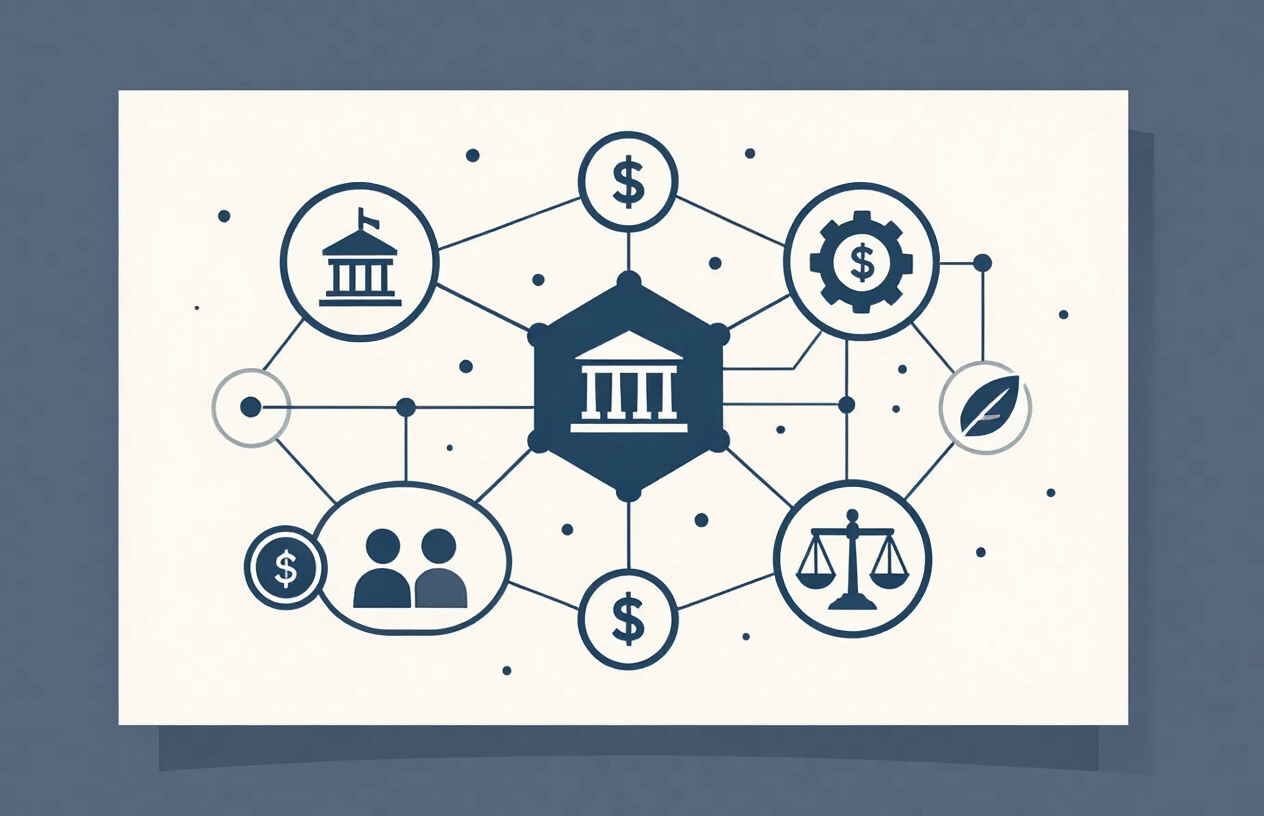
Political factors include government policies, political stability, and regulatory frameworks. For example, Brexit forced companies to reassess their European operations, while trade wars between the US and China disrupted global supply chains. Even local political shifts, like changes in minimum wage laws or environmental regulations, can dramatically impact operational costs and strategic decisions.
Economic conditions directly affect purchasing power and business costs. Interest rates influence borrowing costs and capital investment decisions. Inflation erodes consumer purchasing power and increases input costs. Exchange rate fluctuations impact international competitiveness. During the 2008 financial crisis, consumer spending plummeted while unemployment soared, forcing businesses to pivot toward value offerings or risk failure.
Sociocultural trends reflect evolving demographics, attitudes, and lifestyles. The aging population in developed countries has created new markets for healthcare and retirement services. Shifting attitudes toward sustainability have pushed companies to adopt greener practices. The wellness movement has transformed food and fitness industries. Understanding these trends helps businesses adapt their offerings to changing consumer values and demographic shifts.
Technological developments consistently reshape competitive landscapes. Digital transformation has disrupted traditional business models across industries. AI and automation are revolutionizing manufacturing, customer service, and knowledge work. The smartphone revolution created entirely new markets while destroying others (like standalone GPS devices and point-and-shoot cameras).
Industry-Specific Environment: Porter's Five Forces
While PESTEL examines broad external forces, Porter's Five Forces framework narrows the focus to industry-specific competitive dynamics.
Competitive rivalry varies dramatically between industries. In mature markets with similar products (like airlines or telecommunications), price competition tends to be fierce. In contrast, highly differentiated markets allow for premium pricing and higher margins. The intensity depends on factors like industry growth rate, fixed costs, and exit barriers.
Threat of new entrants relates to how easily competitors can join your market. High barriers to entry—like massive capital requirements in semiconductor manufacturing or strict regulations in pharmaceuticals—protect established players. Low barriers (as in many digital businesses) create constant competitive pressure from newcomers with innovative approaches.
The bargaining power of suppliers and buyers affects a company's ability to capture value. When few suppliers exist (as with specialized computer chips), they can demand premium prices. Conversely, when customers can easily switch between alternatives, they gain leverage to negotiate better terms.
The threat of substitutes comes not just from direct competitors but from alternative solutions to customer problems. Videoconferencing has substituted business travel; streaming services replaced DVD rentals. Porter's analysis helps businesses identify these sometimes non-obvious competitive threats.
Competitive Landscape Analysis
Beyond understanding broad industry forces, businesses must analyze specific competitors through strategic group mapping. This technique clusters competitors based on similarities in strategies, allowing companies to identify direct threats versus peripheral players.
Effective competitive analysis requires systematic benchmarking methods to compare performance metrics like market share, customer satisfaction, and operational efficiency against industry leaders. This helps identify competitive gaps and improvement opportunities.
Stakeholder Environment and Relationship Management
Organizations must balance relationships with diverse stakeholders whose interests often conflict. Primary stakeholders (shareholders, employees, customers) directly impact daily operations, while secondary stakeholders (media, activists, communities) influence reputation and social license to operate.
Stakeholder mapping helps prioritize these relationships based on power, legitimacy, and urgency. This prioritization becomes especially important during crises when resources are limited and stakeholder expectations may diverge dramatically.
Environmental Scanning and Strategic Response
Systematic environmental scanning involves continuously monitoring external changes that might impact the organization. This includes tracking competitors, technological breakthroughs, regulatory changes, and market trends.
The COVID-19 pandemic demonstrated the importance of scenario planning and strategic flexibility. Companies with agile structures and contingency plans (like remote work capabilities) adapted more effectively than those with rigid models. Some businesses converted production lines to make ventilators or hand sanitizer, while others rapidly shifted to digital service delivery. These examples highlight how environmental scanning enables timely strategic responses to external disruptions.
Comments
Post a Comment